
What I’m Learning as I Explore Agentic Commerce


Over the past several months, I’ve been spending time researching what’s increasingly being referred to as Agentic Commerce. I didn’t set out to study it as a standalone trend. It emerged naturally from a broader question I’ve been asking across retail and consumer goods:
What changes when software doesn’t just support the buying journey, but actively participates in it on behalf of the consumer?
As I followed that question, a consistent pattern began to take shape.
From Assisted Shopping to Delegated Decisions
Most digital commerce experiences today are designed to assist people. Search helps customers find products. Recommendations narrow options. Reviews provide confidence. In all cases, the final decision still rests with the human.
Agentic Commerce introduces a different model.
In this emerging paradigm, consumers delegate intent to software agents. Those agents understand preferences, constraints, budgets, and context, and then act across the market on the user’s behalf. Discovery, comparison, and even transaction initiation increasingly happen without direct human involvement.
For retailers, this represents a meaningful shift. The challenge is no longer just optimizing experiences for people. It’s also about ensuring products, policies, and services can be clearly understood, trusted, and selected by AI agents.
The Role of Standards and Infrastructure
As I dug deeper, it became clear that much of the progress in Agentic Commerce is happening at the infrastructure level.
Open standards such as the Agentic Commerce Protocol and emerging commerce APIs are defining how agents communicate with merchants, express intent, and initiate transactions. In parallel, work is underway on agent-to-agent communication, context sharing, and secure agent identity.
These efforts may not be visible to end customers, but they are foundational. They address practical questions retailers will need to answer:
How do we recognize legitimate agents?
What data should be exposed, and under what conditions?
How do consent and trust work when actions are taken by software?
This is less about user interface design and more about preparing commerce systems for a new class of participant.
When Markets Become Dynamic Systems
One area I find particularly compelling is the use of simulation to understand agent-driven markets.
Projects like Magentic Marketplace, coming out of Microsoft Research, explore what happens when large numbers of autonomous agents interact in a shared economic environment. These simulations help surface how pricing, competition, bias, and emergent behaviors evolve when agents—not people—are making decisions.
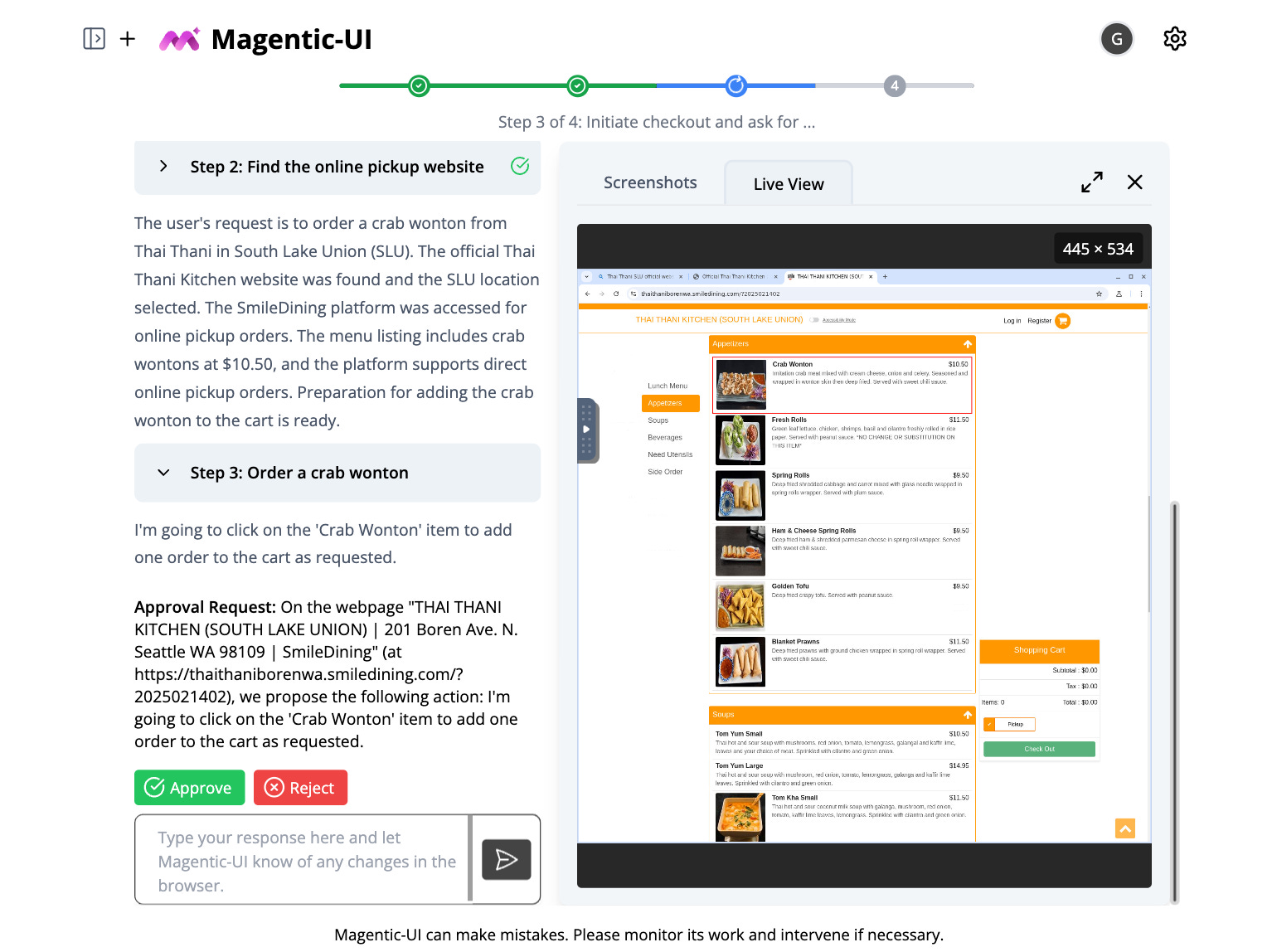
This reinforces an important point: Agentic Commerce isn’t simply about personalization at scale. It changes the dynamics of the market itself. Retailers are no longer just designing storefronts; they are participating in adaptive, agent-driven ecosystems.
Interfaces Still Matter, but They’re Changing
Even as more activity shifts behind the scenes, interfaces remain important.
Technologies like NLWeb and solutions such as Personalized Shopping Agents and the Copilot Merchant Program point to how conversational and agent-aware experiences can be integrated into existing retail journeys.
What’s changing is who those interfaces are designed for. In many cases, the primary audience is no longer just the shopper, but the agent acting on their behalf. Clarity, structure, and trust become just as important as visual design.
Open Questions I’m Continuing to Explore
This research has raised a number of questions that I’m still actively exploring:
How should retailers structure catalogs, pricing, and policies so they are consumable by agents?
What does differentiation look like when agents optimize for outcomes rather than emotions?
How do loyalty, brand, and trust evolve in agent-mediated commerce?
What governance and safeguards are required as agents gain more autonomy?
These questions don’t have immediate answers, but they are becoming increasingly relevant.
Why I’m Sharing These Findings
I’m sharing this perspective not as a finished point of view, but as a snapshot of what I’m learning as the space evolves. Agentic Commerce is still forming, but the building blocks are already visible.
Retailers that begin engaging with these concepts early—understanding the standards, platforms, and implications—will be better positioned to adapt as agent-driven interactions become more common.
This isn’t about predicting a distant future. It’s about recognizing the early signals and preparing thoughtfully for what’s next.
Agentic Commerce – Key Resources I’m Tracking
Foundational Standards & Protocols
Agentic Commerce Protocol (ACP) – Open standard defining how AI agents interact with merchants, initiate checkout, and establish trust: https://www.agenticcommerce.dev/
OpenAI Commerce APIs – Developer APIs enabling agent-initiated discovery and transactions: https://developers.openai.com/commerce
Agent Payments Protocol (AP2) – Emerging open payment protocol for autonomous agents, backed by major payment networks: https://www.mckinsey.com/capabilities/quantumblack/our-insights/the-agentic-commerce-opportunity-how-ai-agents-are-ushering-in-a-new-era-for-consumers-and-merchants
Model Context Protocol (MCP) – Protocol for sharing structured intent and context across AI agents and tools: https://www.mckinsey.com/capabilities/quantumblack/our-insights/the-agentic-commerce-opportunity-how-ai-agents-are-ushering-in-a-new-era-for-consumers-and-merchants
Agent-to-Agent (A2A) Protocols – Enables agents to communicate, negotiate, and coordinate across platforms and marketplaces: https://www.mckinsey.com/capabilities/quantumblack/our-insights/the-agentic-commerce-opportunity-how-ai-agents-are-ushering-in-a-new-era-for-consumers-and-merchants
Trusted Agent Protocol (Visa / Cloudflare) – Security framework to distinguish legitimate AI agents from malicious bots: https://www.axios.com/2025/10/14/visa-ai-shopping-agent-protocol-bot
Retail & Industry Research
McKinsey – The Agentic Commerce Opportunity – Comprehensive analysis of how autonomous agents may reshape consumer buying and merchant strategy.
https://www.mckinsey.com/capabilities/quantumblack/our-insights/the-agentic-commerce-opportunity-how-ai-agents-are-ushering-in-a-new-era-for-consumers-and-merchantsBCG – Agentic Commerce Is Redefining Retail – Strategic guidance for retailers adapting to agent-mediated purchasing.
https://www.bcg.com/publications/2025/agentic-commerce-redefining-retail-how-to-respondForrester – Is Agentic Commerce a Thing? – Practical primer separating early signal from hype.
https://www.forrester.com/blogs/is-agentic-commerce-a-thing/CB Insights – Agentic Commerce Market Map – Landscape of startups and platforms across discovery, payments, and analytics.
https://www.cbinsights.com/research/report/agentic-commerce-market-map/HUMAN Security – Guide to Adopting Agentic Commerce – Risk, fraud, and governance considerations for enterprises.
https://www.humansecurity.com/learn/resources/guide-adopting-agentic-commerce/
Simulation & Research Environments
Magentic Marketplace (Microsoft Research) – Open-source simulation environment for studying agent-driven market dynamics: https://arxiv.org/abs/2510.25779
Platform & Retail-Facing Solutions
NLWeb – Framework for bringing conversational and agent-aware interfaces directly to the web: https://news.microsoft.com/source/features/company-news/introducing-nlweb-bringing-conversational-interfaces-directly-to-the-web/
Copilot Merchant Program (Microsoft) – Program enabling retailers to integrate with Copilot shopping experiences: https://www.microsoft.com/en-us/microsoft-copilot/blog/2025/04/18/introducing-the-copilot-merchant-program/
Personalized Shopping Agent (Microsoft) – Reference implementation for agent-driven personalization in retail experiences: https://learn.microsoft.com/en-us/industry/retail/personal-shopping-agent/overview-personal-shopping-agent
Stripe Agentic Commerce Solutions – Payment and checkout infrastructure for agent-initiated transactions: https://stripe.com/blog/introducing-our-agentic-commerce-solutions
Conceptual & Strategy Resources
commercetools – How Agentic Commerce Is Transforming Retail – Commerce architecture and use-case implications:
https://commercetools.com/blog/how-agentic-commerce-is-transforming-retail-and-beyondAgentic Commerce Agency – Resource Hub – Tactical adoption and go-to-market perspectives: https://agenticcommerce.agency/resources/agentic-commerce/
Conversational Commerce (Wikipedia) – Foundational context for conversational and agent-driven commerce models: https://en.wikipedia.org/wiki/Conversational_commerce
Advanced Research & Technical Papers
FaMA – LLM-Empowered Agentic Assistant for C2C Marketplaces – Research on agent-driven discovery and transactions at scale: https://arxiv.org/abs/2509.03890